JOIN THE RENAISSANCE
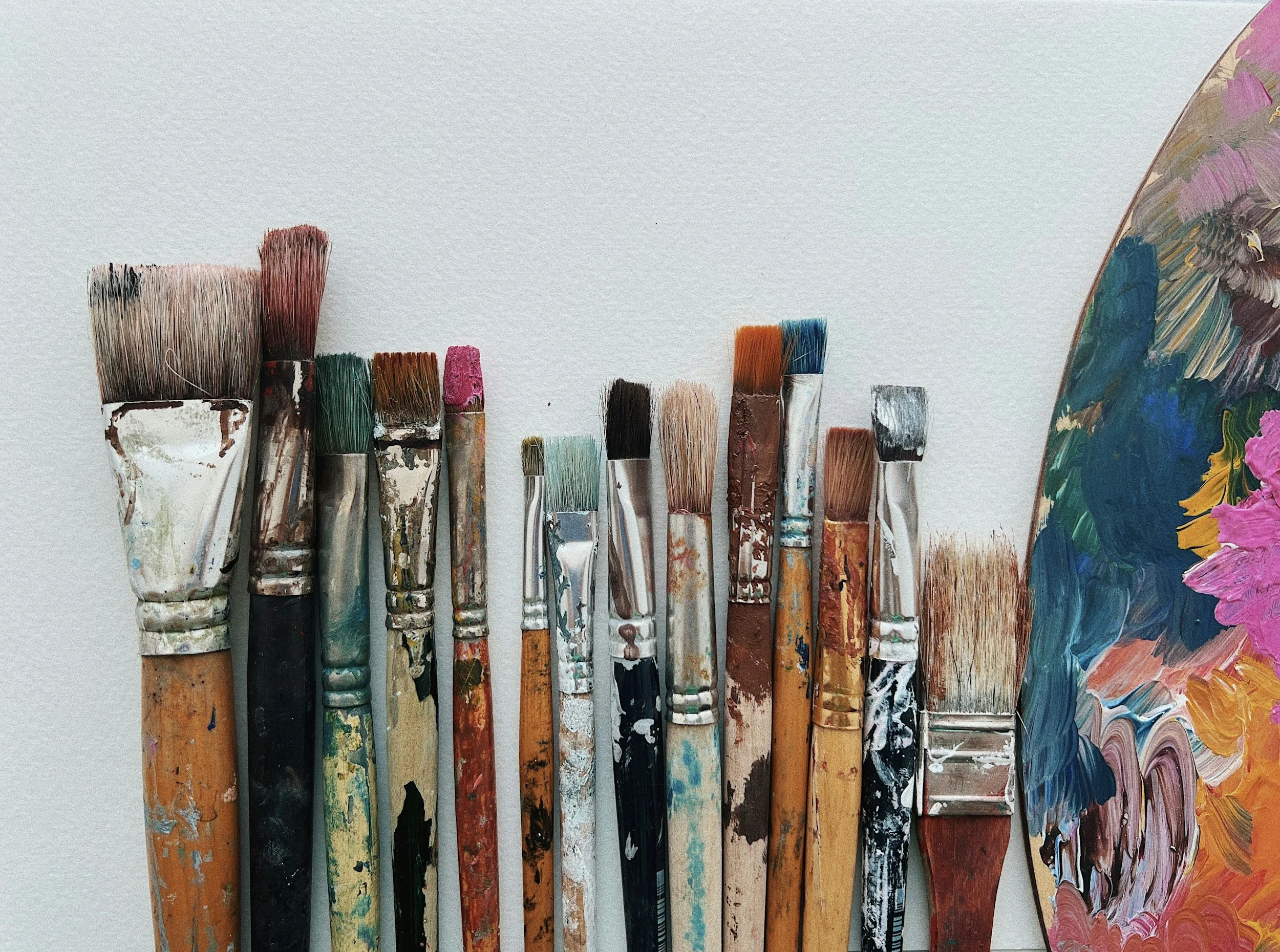
Over the last year, we’ve experienced an influx of AI in our daily lives. From flyers to commercials to billboards to the email you thought was from your boss but was in fact written and edited by his AI assistant, ChatGPT, we’re suddenly a culture dependent upon and assisted by artificial intelligence.
I’ve accepted our new reality in phases. Awe and wonder, first, at what AI is capable of. Then denial that I’m somehow a part of the generation ushering in the AI age. Differing degrees of fear as it takes over more and more workspaces and people lose or can’t find jobs because they’ve been replaced. Finally, irritation at the seeming absence of real humans in places I want or need them to be.
The more I think about it, these phases of acceptance look more like the stages of grief than an effort to embrace a new way. The deeper we get into this AI revolution, the more I grieve the humanity we’re willingly giving up in the process.
The hardest part of all this generated technology hasn’t been the innovation or efficiency AI gives us, but the lack of human spirit behind any of it. It’s one thing for AI to run algorithms and economize complicated systems. It’s quite another to see a copycat flyer posted twelve different ways. Or ask a robotic chatbot a question on a website devoid of warmth or humanity. Or watch a generated commercial with characters too airbrushed and symmetrical to be anything close to human.
In our pursuit of technological advancement, we’ve forgotten to bring humanity with us.
But on the other side of the coin, in this AI-saturated world, art stands out in a defiant sort of way. AI might be faster, quicker, built-with-fewer-errors-and-zero-mistakes, but it will never have a personality, never take time to ponder, wonder, change its mind, never make blunders, never feel empathy or act out of compassion, never connect with us, human to human, soul to soul.
And because AI is only cold, emotionless code, it can never create, make, build or design. Not in the way artists do. Not in the way our projects pour out of us, straight from our soul, from all the beautiful and ugly places that make us so flawed, so real, so human.
AI may be able to mimic a novel, or produce a song, but it will never know the toil of typing late into the night or the visceral vulnerability behind a melody that feels ripped from bone. AI can create an incredible image based on a few commands, but it will never know what it is to hold a paintbrush or aim a camera at just the right angle in just the right light.
The more AI this world becomes, the more valuable art—made by scarred human hands and thought up by flawed human brains—becomes. The flatter and more lifeless we allow society to evolve into, rampant with AI images and AI slogans and AI initiatives, the richer and more beautiful our art contrasts.
Art isn’t just a thing humans do. It’s the rebellion humanity invests in while AI monetizes our outputs, plans our social media strategies, and writes our emails—all in the name of efficiency.
Now, more than ever, is the time to invest in our hobbies and passion projects. While our workplaces streamline and look to AI to solve corporate problems, the more valuable our watercolors are, the more our plucking piano keys become, the more those acting classes we’ve put off for far too long become.
AI can be a tool to support us, but it will never be the sum total of the human experience. Nor will it ever be able to encompass or explain what it is to be truly human—the glory, the suffering, the lovely days, and the awful ones, a good belly laugh, a full-body sob, a cold, the flu, a terminal illness, learning to walk, a lost tooth, a first job, the big promotion, a sculpture we molded with our bare hands, a song we sung in front of an audience, a mural we painted, a part we earned, the butterflies of performing, the soaring victory of making something beautiful. With our hands, with our bodies, with our voices, with our hearts.
The richness of humanity will not be measured in data centers and chatbots. It will be painted on canvases, written from our lived experiences, performed on stages, and captured in the rawness and realness of the human soul.
And the more we incorporate AI into everyday life, the more these artistic things will deepen in value. As civilization turns plastic, art becomes gold. Billionaires may be capitalizing on digital futures, but I’m going to invest in my own humanity. And I hope you will too.
Take a piano lesson. Learn to play the guitar. Pick up a paintbrush. Finally join that acting class you’ve always secretly wanted to. If AI is going to suck the humanity out of the world, we better work twice as hard to replace it with as many beautifully human paintings and words and melodies and performances as we can.
Forget the AI Revolution. I want to join the Renaissance.

ABOUT THE AUTHOR
RACHEL HIGGINSON
Author/Writer | 402 Arts Collective
Rachel Higginson is the best-selling author of The Five Stages of Falling in Love, Every Wrong Reason, Bet on Us, and The Star-Crossed Series.