Technology can connect us. But can it replace the human experience of learning an art form?
From Ben's Desk | 402 Arts Collective
Technology has changed just about everything in our lives.
We can attend meetings from our living rooms, collaborate with people across the world, and access more information in a few seconds than previous generations could have imagined.
And somewhere along the way, we began asking a pretty reasonable question:
If we can do all these things online, why can't we learn music that way, too?
It's a fair question. And after years of working with students, families, and artist instructors at 402 Arts Collective, I've had the opportunity to see both the tremendous benefits and the very real limitations of virtual arts education.
My answer might surprise you.
Yes, virtual music lessons can be incredibly valuable.
But no, I don't believe technology will ever completely replace the experience of learning an art form from another human being, sitting in the same room, looking each other in the eye.
And here's why.
There's Something About Being in the Same Room
I think one of the most overlooked parts of arts education is the human connection between the artist instructor and the student.
It's the little things.
The body language. The subtle expressions. The way an instructor notices that a student is struggling before the student even says a word.
It's the ability to demonstrate a technique, observe a movement, and make a small adjustment in real time.
There's something about that eyeball-to-eyeball, human-to-human interaction that technology simply cannot fully reproduce.
And I don't think we should pretend otherwise.
When you're learning an art form, you're not simply receiving information. You're participating in an experience that is deeply personal, physical, and often emotional.
You're learning from someone who has spent years developing a skill, and they're attempting to pass along something that can't always be explained with words.
Sometimes it's a gesture.
Sometimes it's a sound.
Sometimes it's simply being close enough to observe how another artist approaches their craft.
Those moments matter.
Some Art Forms Are Harder to Teach Through a Screen
Not every artistic discipline translates to virtual instruction in the same way.
Take drawing or painting, for example.
Much of the work is visual. An instructor can demonstrate techniques on camera, share examples, observe a student's progress, and offer meaningful feedback.
In many cases, virtual instruction can work wonderfully.
But consider something like learning the cello.
Now we're talking about an instrument that requires an extraordinary amount of physical coordination.
Posture. Bow pressure. Hand positioning. Muscle memory. Subtle movements that can dramatically affect the sound being produced.
Or consider percussion, where timing, movement, physical technique, and the interaction between the performer and instrument are all essential.
These are highly nuanced skills.
And while a camera can capture much of what's happening, it doesn't always communicate the full physical experience.
A skilled instructor may notice something in person that would be difficult to see or hear through a screen.
That doesn't mean virtual lessons are ineffective for these instruments.
It simply means we need to recognize that different art forms have different instructional needs.
The question shouldn't always be whether virtual lessons are better or worse. It should be whether the format is appropriate for what the student is trying to learn.
The Pandemic Taught Us Something Important
I don't think I can have this conversation without acknowledging what happened during the COVID-19 pandemic.
Like so many organizations, 402 Arts Collective suddenly found itself in a world where gathering together in person wasn't possible.
Our studios, our instructors, and our students were all affected.
And yet, something remarkable happened.
People still wanted to learn.
Students still wanted to create.
Artists still wanted to teach.
That desire didn't disappear simply because we couldn't be in the same room.
Virtual lessons became an incredibly important part of how we continued serving our community.
In many ways, they were a lifesaver for our organization during that period.
Technology gave us a way to maintain relationships, continue instruction, and preserve a sense of connection during an incredibly unusual time.
And I'm grateful for that.
It demonstrated something I believe is worth remembering:
Technology can create opportunities for artistic growth when physical circumstances would otherwise prevent them.
That's a tremendous benefit.
And it's one we shouldn't take for granted.
A Good Virtual Lesson Still Needs a Human Connection
One of the things we emphasize at 402 Arts Collective is that the relationship between an artist instructor and a student matters.
That doesn't change simply because the lesson takes place online.
In fact, I would argue that maintaining that relationship becomes even more intentional when you're teaching virtually.
The instructor still needs to encourage the student.
They still need to challenge them.
They still need to recognize progress, establish expectations, and help the student develop discipline.
And sometimes they need to push the student to do the hard things.
Because let's face it: learning an art form isn't always easy.
There are moments of frustration.
There are repetitive exercises.
There are techniques that take weeks, months, or even years to develop.
A good mentor doesn't eliminate those challenges.
They help the student understand why the challenges are worth pursuing.
And whether that encouragement happens across a piano bench or through a computer screen, the human relationship remains essential.
Virtual instruction should never become simply a digital transaction where information is delivered and the student is left to figure everything out alone.
It should still feel like mentorship.
If You're Taking Virtual Lessons, Your Technology Matters
Now, here's something practical that I think gets overlooked.
If you're going to learn an art form virtually, the quality of your technology can make an enormous difference.
And I'm not just talking about having an expensive computer.
I'm talking about creating an environment where communication feels as natural as possible.
One of the biggest challenges with virtual instruction is latency.
That's the delay between something happening on one end of a video call and the other person seeing or hearing it.
In a normal business meeting, a little delay might not be a big deal.
But in a music lesson?
It can be incredibly frustrating.
Imagine trying to demonstrate a rhythm or play alongside your instructor when the sound arrives a fraction of a second late.
Suddenly, something that should feel natural becomes awkward.
That's why I encourage families and instructors to pay attention to a few practical things:
A reliable, fast internet connection. A stable connection helps prevent interruptions and makes communication easier.
Good audio equipment. Music is something we experience through sound. If everything sounds like it's coming through a tin can, we're losing an important part of the experience.
A larger screen when possible. Being able to clearly observe an instructor's movements, posture, and demonstrations can make a meaningful difference.
A thoughtful camera position. The instructor needs to see what the student is actually doing, not just their face.
A simple, familiar setup. The less time spent troubleshooting technology, the more time everyone can spend making art.
For some families, connecting a computer or tablet to a larger display can make virtual lessons feel much more natural.
And instructors need to become comfortable presenting themselves on camera, too.
Teaching through a screen is a skill in itself.
The goal should be to make the technology fade into the background so the relationship can take center stage.
Of course, even excellent equipment can't eliminate every limitation of online music instruction. Ordinary video calls can still introduce delays, compress sound, or make simultaneous playing difficult.
But a thoughtful setup can make the experience significantly better.
So, Should You Choose Virtual or In-Person Music Lessons?
I think this is where we need to move away from the idea that there's one correct answer for everyone.
Every student is different.
Every art form is different.
And every family has different circumstances.
For some students, virtual lessons provide access to an instructor they might never otherwise meet.
For others, online instruction makes it possible to continue learning during travel, illness, or other scheduling challenges.
And for certain artistic disciplines, the virtual format may be a very natural fit.
But for students who are developing highly physical techniques, learning complicated instruments, or benefiting from close personal guidance, I believe in-person instruction often provides a richer experience.
Especially during the early stages of learning.
At 402 Arts Collective, we place tremendous value on the environment created when artists and students gather together.
There's something special about being in a space dedicated to creativity.
Hearing another student practicing down the hallway.
Seeing instruments and artwork around you.
Being surrounded by people who are pursuing their own artistic journeys.
Those experiences become part of the education itself.
And while technology can help us connect, it doesn't fully reproduce that environment.
Technology Should Be a Tool, Not the Tool
Here's where I land on this whole conversation.
I love technology.
I appreciate what it allows us to accomplish, and I've seen firsthand how it can open doors for students and artists.
But I never want technology to become a replacement for the organic process of passing an art form from one generation to the next.
Think about what that really means.
An artist spends years, sometimes decades, developing a craft.
They learn through practice, repetition, failure, discovery, and experience.
And eventually, they have an opportunity to pass some of that knowledge along to someone else.
That's a remarkable exchange.
It's more than information.
It's the transfer of experience, perspective, discipline, and passion.
Technology can absolutely support that process.
It can expand access.
It can provide convenience.
It can create new opportunities.
But it should never become the entire point.
Technology can be a tool for arts education. But it should never become the thing we're actually trying to preserve.
What we're trying to preserve is the art itself, and the human experience behind it.
Art Is About More Than What You Can Do
I think we live in a world that increasingly measures success by speed, efficiency, and productivity.
How quickly can you learn something?
How many things can you accomplish?
How much information can you consume?
Technology has made our lives faster and, in many ways, more productive than ever before.
But I believe art challenges us to think differently.
Because becoming an artist isn't simply about learning how to do a bunch of things.
It's about becoming something.
It's about developing the ability to communicate something meaningful through music, visual art, creative movement, drama, or any number of other artistic expressions.
And that process requires something of us.
It requires patience.
It requires sacrifice.
It requires discipline.
And sometimes, it requires doing things that are genuinely difficult.
I believe art is one of society's great truth tellers.
It gives us a way to communicate things that can't always be explained through ordinary conversation.
It allows us to express beauty, struggle, joy, grief, hope, and the countless experiences that make us human.
And learning to communicate those things authentically takes time.
There are no shortcuts to that kind of growth.
Technology may help us along the way, but it cannot do the becoming for us.
That work belongs to the artist.
The Future of Arts Education Is Still Human
I don't believe we need to choose between embracing technology and preserving traditional arts education.
We can do both.
We can celebrate the opportunities virtual instruction provides while recognizing the irreplaceable value of human connection.
We can use digital tools to expand access without allowing those tools to define the entire learning experience.
And we can continue encouraging students to pursue artistic growth with discipline, curiosity, and courage.
At 402 Arts Collective, that's the kind of education I want us to champion.
Not simply the transfer of information.
Not simply the completion of lessons.
But the development of artists.
People who are learning not only how to perform, create, or communicate, but how to express something meaningful about the world around them.
Because even as technology continues to change the way we live and learn, I believe one thing will remain true:
Art is a truth teller in society. And learning to tell the truth through an art form requires patience, sacrifice, hard work, and the willingness to become something more than we were yesterday.
That's something worth preserving.
And that's something no screen can ever fully replace.
Discover Your Artistic Journey at 402 Arts Collective
Whether you're exploring music lessons for yourself or looking for an artist instructor for your child, we believe the relationship between student and mentor is one of the most important parts of the experience.
At 402 Arts Collective in Omaha, our artist instructors are passionate about helping students discover their abilities, develop their craft, and grow as artists.
Explore our artist instructor profiles, learn more about our programs, and start a conversation about the learning experience that's right for you.
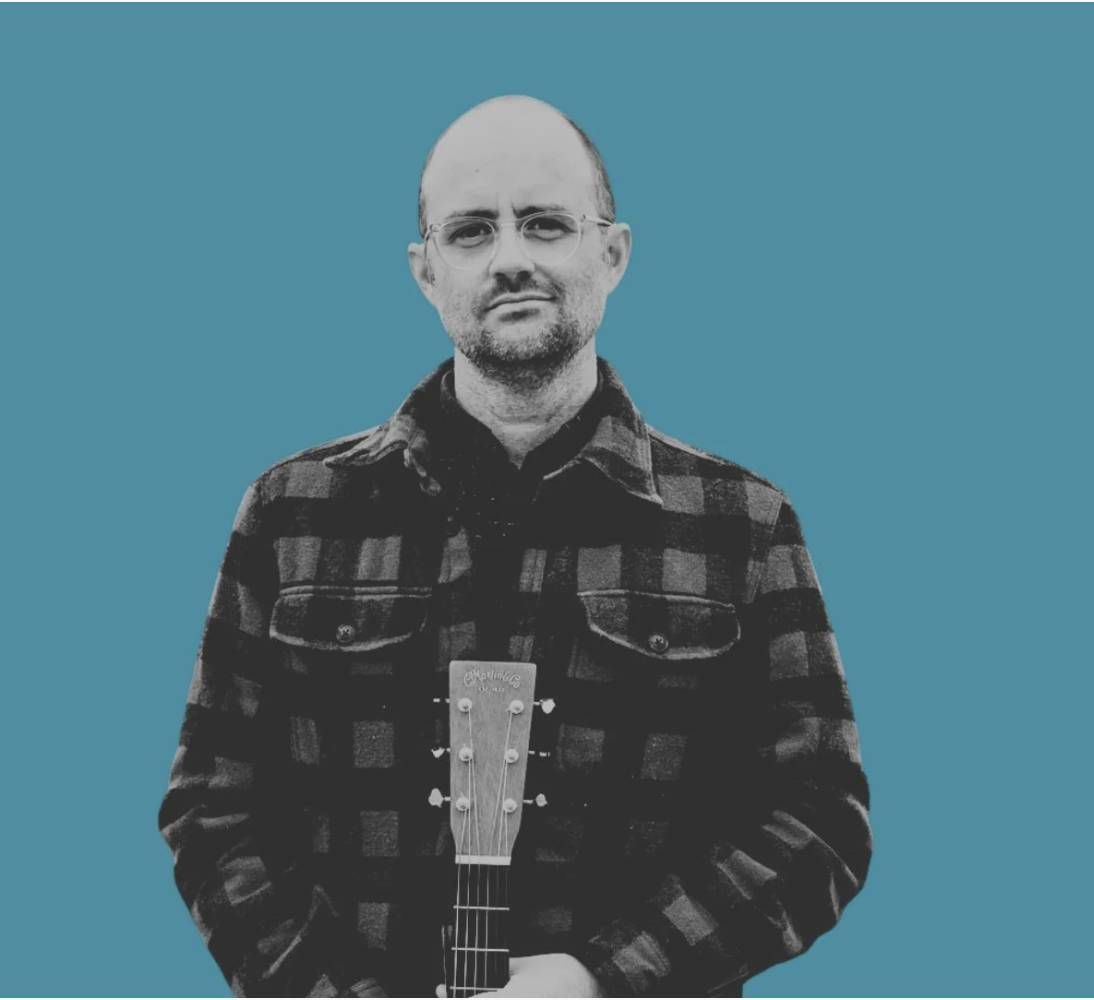
ABOUT THE AUTHOR
BEN Shafer
Co-Founder/Executive Director | 402 Arts Collective
Ben has served as the Executive Director of 402 Arts Collective for seventeen years since its inception in 2010.